It was an exciting October for equity markets.
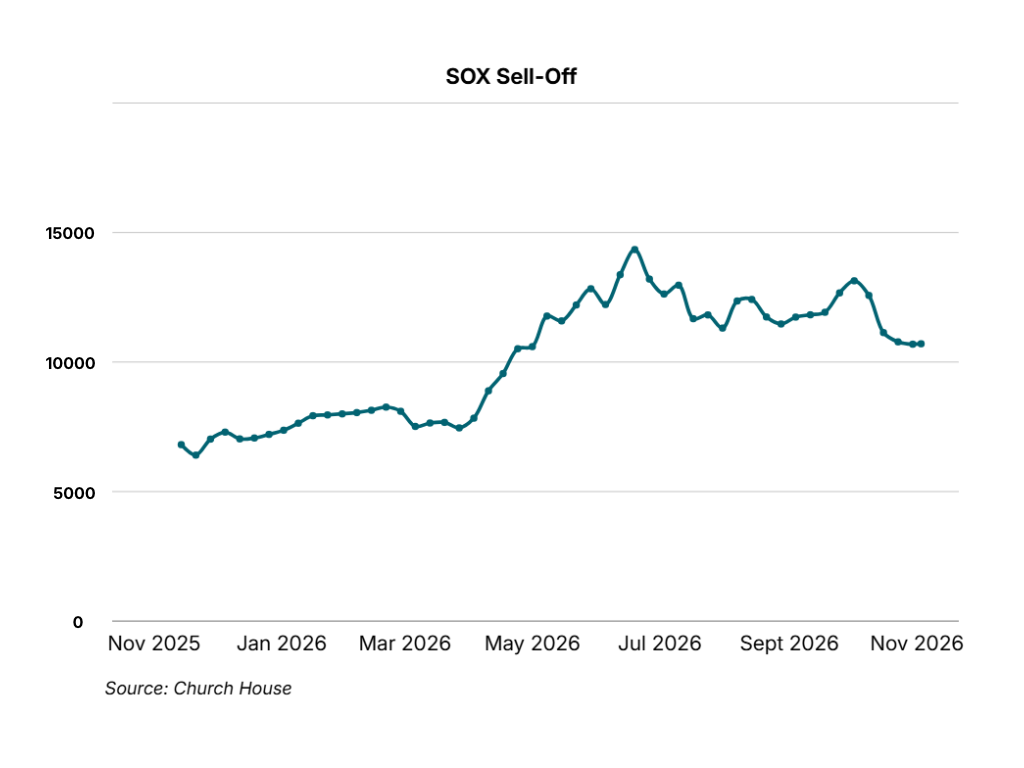
After a strong first six months of the year, followed by a relatively uneventful summer for equity indices, the final quarter has begun with a sharp sell-off in semiconductors and some ugly individual stock moves.
To paraphrase our September equity comment, we made the point then that bond markets were showing signs of genuine strain and that the strength of equities was at odds with this. We posed the question: Can the strength of AI growth power-through the headwind of increased rates?
On the subsequent move in equity markets, particularly AI-related stocks, the short-term answer is a clear no.
The picture is more intricate than this. US Treasury yields have, in fact, fallen since the end of September, so the move in semiconductors has not been a reaction to sovereign borrowing costs. The expected catalyst was higher rates, but the actual catalysts were increased investor scepticism that these AI businesses will:
1. Be able to keep hitting their current astronomical growth rates
2. Have the free cash flow to cover their investment/debt commitments
To ATFQ, this is certainly a significant AI sell-off, but we do not think that it is as simple as whether a bubble goes pop or not. There is not one specific bubble, we are still early in the development and adoption of AI, and the range of potential outcomes is huge at the individual company level.
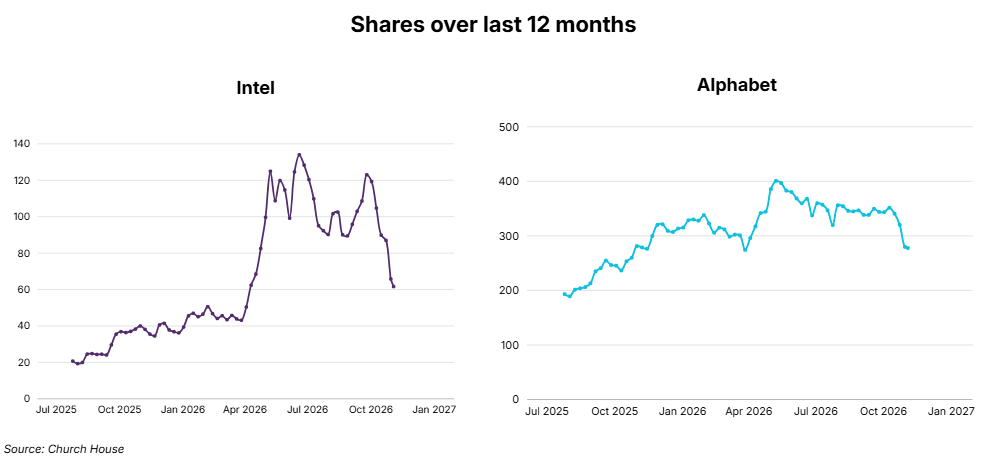
Where there were bubble-like tendencies was in some of the more speculative AI growth investment cases, where the market up until recently, had very much been looking on the bright side. For example, Intel shares rose sixfold in the 12 months after Donald Trump and Nvidia acted as cornerstone investors in two equity raises, providing capital for Intel to invest in becoming America’s onshore rival to the mighty Taiwan Semiconductor. Shares in Intel felt the full force of gravity (but are still up comfortably over 12 months) after their recent results reminded investors that Intel have a long history of disappointment in foundry manufacturing and that Taiwan Semiconductor’s external foundry order book remains vastly larger than Intel’s.
The same is the case for Alphabet, where less strong growth in Google advertising revenue guidance recently took shares back to flat over 12 months, having been up over 40% in May. Is it a surprise that the rise of consumer-facing AI apps (ChatGPT, Gemini, Muse…) is beginning to challenge the economics of traditional search? No. Has the market overlooked this risk in favour of excitement about Google Cloud? Yes.
Here are just two examples, but our point (we hope) is clear. Investors are applying a healthy level of scepticism to long-duration growth opportunities where, before, caution was not being applied. Does this mean that AI is a market theme of the past? No, but we will see how far this risk-off temperament plays out – the pendulum had swung very far in one direction (i.e. buy everything AI) and there is scope for some reversion.
In the meantime, focusing one’s attentions on businesses with low funding requirements, already robust balance sheets and strong supply chains remains, for us, the best defence against a potentially volatile period ahead (copy and paste of last month’s conclusion).
The above article has been prepared for investment professionals. Any other readers should note this content does not constitute advice or a solicitation to buy, sell, or hold any investment. We strongly recommend speaking to an investment adviser before taking any action based on the information contained in this article.
Please also note that the value of investments and the income you get from them may fall as well as rise, and there is no certainty that you will get back the amount of your original investment. You should also be aware that past performance may not be a reliable guide to future performance.
How would you like to share this?