
When grandparents think about helping their grandchildren, they often consider Junior ISAs, school fees, or gifts towards a first home. However, one of the most powerful and frequently overlooked options is a Junior Self-Invested Personal Pension (SIPP).
A Junior SIPP is just a smaller version of an ordinary SIPP, which allows for contributions of (up to) £2,880 per year for the benefit of anyone under the age of eighteen, with HMRC automatically adding £720 in tax relief, resulting in a total annual contribution of £3,600 gross*.
So that is the equivalent of +20% uplift before you add on any investment returns.
While retirement may seem a lifetime away to a child, that's precisely what makes the Junior SIPP so compelling. Even relatively modest contributions made early in life can benefit from decades of compound growth.
A Real-Life Example
One client of Church House Investments took a truly long-term view and established nine Junior SIPPs, one for each of his grandchildren.
Over the years, through a combination of regular contributions and investment growth, the portfolios have grown to an aggregate value of approximately £840,000. The grandchildren, now aged between 15 and 28, have been given a remarkable head-start towards a well-funded retirement.
Commenting on this plan, our client said:
“This is surely one of the very best things any grandparent can do for a grandchild today: to present them with a ready-made pension pot to which they can then contribute once they start working.From a grandparent’s point of view, the pot can’t be touched until the grandchild reaches private pensionable age**. I recognised this would allow the benefits of long-term investment and the beauty of compound interest to work their magic undisturbed for many a year and after my eventual demise. I hope when they call time on their careers, they will bless me for it!”
* At rates currently applicable for tax year 2026/27
**The minimum age at which private pension benefits can normally be accessed is currently 55, increasing to 57 from 6 April 2028. This minimum age may be subject to further changes in the future.
The Power of Time
Assuming the £840,000 remained invested without any additional contributions, the potential value of the fund after 30 or 40 years is shown below, with the 40-year period broadly reflecting the point at which the youngest grandchild might be able to access their pension benefits under current legislation. The typical selection of three annualised rates of growth is used:
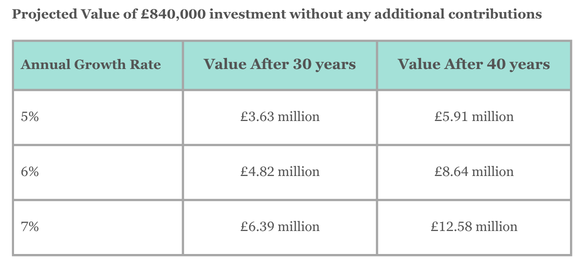
Split equally among the nine grandchildren, this would equate to approximately:
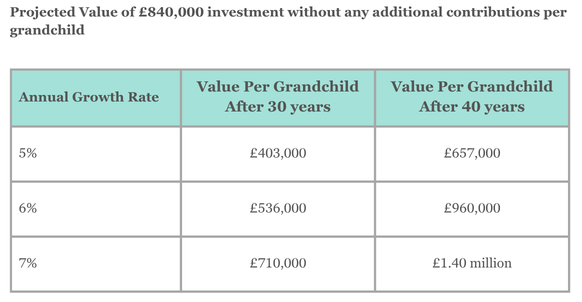
Or a tidy pension pot, by any standards. Of course, investment returns are not guaranteed, but the illustration demonstrates the extraordinary power of compounding (what Albert Einstein referred to as “the Eighth Wonder of the World”). What started as a small gift from a grandfather could ultimately become a significant source of retirement wealth for future generations.
Perhaps most strikingly, these figures assume no further additions. But any further pension contributions made by the grandchildren during their working lives would obviously augment these returns. And with a savings vehicle all set up and ready to receive contributions, there is a greater likelihood that the grandchild will follow the good example set by the grandparent.
A Gift That Lasts a Lifetime
For grandparents looking to make a meaningful contribution to their family's future, few gifts can match the long-term potential of a Junior SIPP. A contribution today may not help fund a first car or university fees, but it could provide financial security in decades down the line.
As this family's experience demonstrates, starting early and thinking long-term can create an extraordinary legacy.
After all, many grandparents plant trees under whose shade they will never sit; a Junior SIPP offers the opportunity to do something very similar with their wealth.
Important Information
The contents of this article are for information purposes only and do not constitute advice or a personal recommendation. Investors are advised to seek professional advice before entering into any investment arrangements. Please note that we are not tax experts, and you should seek professional advice concerning your personal tax affairs from qualified advisers, such as tax accountants.
Please also note that the value of investments and the income you get from them may fall as well as rise, and there is no certainty that you will get back the amount of your original investment. You should also be aware that past performance may not be a reliable guide to future performance.
How would you like to share this?